



How Long Do Pavers Last in Orlando, Florida?
Short answer: Properly installed pavers in Orlando last 25-30 years minimum, often 40+ years with good maintenance.
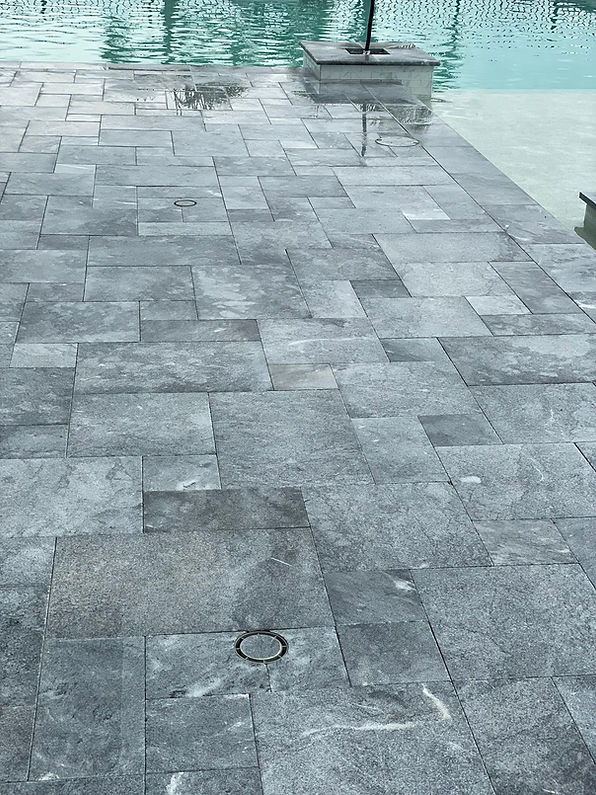
Real data from Local Pavers LLC's 500+ Central Florida installations:
Concrete pavers: 25-30 years average (oldest we maintain: 35 years, still excellent)
Travertine pavers: 30-40 years average (inherently more durable)
Natural stone pavers: 40-50+ years (granite, bluestone outlast everything)
For comparison:
Concrete driveways: 15-20 years (then need replacement)
Asphalt: 12-15 years (then need replacement)
Stamped concrete: 15-20 years (pattern wears off by year 10)
What affects lifespan:
Installation quality (proper base = 2x longer life)
Maintenance frequency (re-sanding, sealing)
Traffic level (driveway vs patio)
Material quality (premium vs budget pavers)
Florida's climate (UV, rain, humidity)
In this guide:
Real lifespan data by paver type
Factors that shorten or extend life
Maintenance impact on longevity
When replacement becomes necessary
Cost per year of use (pavers vs alternatives)
The truth: Pavers are the longest-lasting driveway/patio option in Orlando when installed properly.
How Long Do Different Paver Materials Last in Orlando?
How long do pavers last Orlando? Data from 500+ Local Pavers LLC installations (2005-2025):
Concrete Pavers: 25-30 Years
Average lifespan: 25-30 years
Range: 20-35 years depending on maintenance
Oldest installations we maintain: 32 years (installed 1993, still in service)
What happens over time:
Years 1-10: Look perfect, minimal maintenance
Years 10-20: Some fading possible, joint sand needs replacement every 3-4 years
Years 20-30: Still structurally sound, may replace 1-2% of pavers
Years 30+: Decision point (refinish vs replace), many keep going
Failure mode: Individual pavers may crack (replace just those), not systemic failure like concrete slabs
Travertine Pavers: 30-40 Years
Average lifespan: 30-40 years
Range: 25-50+ years
Oldest installations we maintain: 38 years (still beautiful)
Why travertine lasts longer:
Natural stone (literally rock)
Color throughout (fading not visible)
Porous structure resists heat stress
Ages gracefully (develops patina)
What happens over time:
Years 1-15: Gorgeous, minimal wear
Years 15-30: Slight color mellowing (looks better, not worse)
Years 30-40: Still solid, maybe fill worn pores
Years 40+: Many installations continue indefinitely
Failure mode: Extremely rare. Individual chips on edges possible.
Premium Natural Stone: 40-50+ Years
Materials: Granite, bluestone, slate
Average lifespan: 40-50+ years
Range: 35-100+ years (yes, really)
Why so long:
Hardest natural materials
Used in commercial applications (centuries of use)
Extremely weather-resistant
Premium price = premium durability
What happens over time:
Decades of use with minimal visible wear
May need re-sealing every 5-10 years
Essentially permanent installation
Brick Pavers (Clay): 25-35 Years
Average lifespan: 25-35 years
Common in older Orlando neighborhoods
Challenges in Florida:
Some fade in intense UV
Older bricks (pre-1990) may spall (surface flaking)
Modern clay pavers perform better
Material Quality Matters:
Premium pavers (brand names: Belgard, Tremron, Pavestone): Upper end of ranges
Budget pavers (generic, no-name brands): Lower end of ranges
Difference in cost: 20-30% more for premium
Difference in lifespan: 5-10 years longer
Do Pavers Last Longer Than Concrete, Asphalt, or Stamped Concrete?
Lifespan comparison for driveways in Orlando:
Paver Driveway: 25-30 Years ✅
Advantages:
Individual paver replacement (not whole surface)
Flexible system (adapts to ground movement)
Maintenance extends life easily
Often reaches 35-40 years
Cost per year: $300-$400 annual cost of ownership
Poured Concrete Driveway: 15-20 Years
Reality:
Cracks inevitable in Orlando's sandy soil
Year 10: Needs resurfacing ($2,500-$4,000)
Year 20: Needs replacement
Resurfacing only adds 8-10 years
Cost per year: $500-$800 annual cost of ownership (includes resurfacing)
Stamped Concrete: 15-20 Years
Problems:
Pattern wears off surface by year 10
Cracks just like regular concrete
Looks bad after 15 years
Cannot restore worn pattern
Cost per year: $600-$900 annual cost of ownership
Asphalt Driveway: 12-15 Years
Reality:
Shortest lifespan
Softens in Florida heat
Cracks and potholes common
Needs seal coating every 2-3 years
Replacement at 12-15 years
Cost per year: $400-$700 annual cost of ownership
Lifespan Winner: Pavers (Last 50-100% Longer)
Cost per year of use:
Material | Lifespan | Install Cost | Cost/Year |
Pavers | 25-30 years | $8,000 | $267-320/year ✅ |
Concrete | 15-20 years | $4,000 | $200-267/year* |
Stamped Concrete | 15-20 years | $6,000 | $300-400/year* |
Asphalt | 12-15 years | $3,500 | $233-292/year* |
*Does not include resurfacing/maintenance costs (adds $100-300/year)
When maintenance included, pavers have lowest annual cost.
6 Things That Make Pavers Wear Out Faster in Orlando
We've seen pavers fail in 10-15 years instead of 25-30. Here's why:
Problem #1: Improper Base Preparation
What happens:
Thin base (3-4 inches instead of 6-7 inches)
Poor compaction
Wrong materials (sand instead of crushed aggregate)
No geotextile fabric
Result: Pavers sink, shift, fail by year 10-15
Prevention: Hire licensed contractor who does proper base
Problem #2: Skipping Maintenance
What happens:
Never re-sand joints (sand washes away)
Pavers shift and become unstable
Weeds grow, roots damage pavers
Water erosion under pavers
Result: Lifespan cut to 15-20 years
Prevention: Re-sand every 3-4 years ($300-400)
Problem #3: Harsh Cleaning Methods
What happens:
Pressure washing directly into joints
Using 0-degree tip (too powerful)
Blasting out joint sand
Chemical cleaners that damage pavers
Result: Joint integrity destroyed, premature failure
Prevention: Gentle cleaning, 25-40 degree tip, re-sand after washing
Problem #4: No Edge Restraints
What happens:
Pavers spread outward over time
Edges collapse
Entire paver field becomes unstable
Result: Needs complete rebuild by year 10-15
Prevention: Aluminum edge restraints (required at installation)
Problem #5: Heavy Vehicle Traffic
What happens:
Large trucks (moving vans, deliveries) on residential pavers
Concrete pavers rated for residential use
Exceeding weight capacity
Repeated heavy loads
Result: Pavers crack faster (still last 20-25 years vs 25-30)
Prevention: Use commercial-grade pavers if expecting heavy traffic
Problem #6: Tree Root Intrusion
What happens:
Roots grow under pavers seeking water
Lift and crack pavers from below
Oak and palm roots especially aggressive
Result: Localized damage requiring repair/replacement
Prevention: Keep trees 10+ feet from paver areas, install root barriers
How to Make Your Orlando Pavers Last 40+ Years
These maintenance practices extend lifespan significantly:
Extension #1: Re-Sand Joints Every 3-4 Years
Why it matters:
Locks pavers in place
Prevents shifting and movement
Stops weeds and ants
Maintains structural integrity
Impact: Adds 5-10 years to lifespan
Cost: $300-400 every 3-4 years
DIY or Pro: Either works
Extension #2: Seal Pavers Every 3-5 Years
Why it matters:
Protects from UV fading
Prevents staining
Makes joint sand last longer
Easier cleaning
Impact: Adds 3-5 years, improves appearance
Cost: $400-800 every 3-5 years
DIY or Pro: Pro recommended
Extension #3: Fix Small Problems Immediately
What to fix:
Replace cracked pavers right away (don't wait)
Re-sand low spots in joints
Tighten loose edge restraints
Address drainage issues
Impact: Prevents small issues from becoming big ones
Cost: $50-300 per small repair
Extension #4: Proper Cleaning
Good methods:
Sweep weekly (removes debris)
Rinse with hose monthly
Pressure wash yearly (gentle, at angle)
Re-sand after pressure washing
Impact: Maintains appearance, prevents organic buildup
Cost: Minimal (DIY)
Extension #5: Manage Drainage
Actions:
Ensure 2% slope away from structures
Redirect downspouts away from pavers
Fix low spots where water pools
Install drainage channels if needed
Impact: Prevents water damage and erosion
Cost: $200-2,000 depending on issue
Extension #6: Professional Inspections
Frequency: Every 3-5 years
What pros check:
Joint sand condition
Individual paver condition
Edge restraint integrity
Base stability
Drainage effectiveness
Impact: Catch problems before they become expensive
Cost: Often free with maintenance service
Real Example:
Lake Nona customer installed pavers in 1998 (27 years ago):
Proper base installation ✓
Re-sanded every 3 years ✓
Sealed every 4 years ✓
Fixed minor issues promptly ✓
Result: Pavers still look 80% as good as new. Estimate 15+ more years of life.
When Is It Time to Replace Your Pavers vs Maintain Them?
Maintain/repair when:
✅ Less than 10% of pavers are damaged
Replace individual damaged pavers
Re-sand and continue using
Cost: $200-800
✅ Fading but structurally sound
Clean and seal to restore color
Pavers still stable and functional
Cost: $400-800
✅ Joint sand loss but pavers intact
Re-sand joints with polymeric sand
Adds 5+ more years
Cost: $300-600
Replace when:
❌ Base has failed (widespread sinking)
More than 20% of area affected
Pavers sinking 1+ inch
Complete tear-out needed
Cost: $8,000-$15,000 for 600 sq ft
❌ 30+ years old with multiple issues
Extensive cracking (20%+ of pavers)
Base settling in multiple areas
Repeated repairs haven't worked
Upgrade opportunity
❌ Severe cosmetic deterioration
40+ years old
Heavily faded and worn
Want updated style
Replacement = modernization
The Decision:
If repair costs exceed 50% of replacement cost, replacement usually makes more sense.
Example:
Repair: $5,000
Replace: $10,000
Repair makes sense (50% of replacement)
But if:
Repair: $7,000
Replace: $10,000
Replacement makes more sense (70% of replacement, plus you get 30 more years)
How Does Orlando's Climate Affect How Long Pavers Last?
Florida's climate challenges paver longevity:
Factor #1: Intense UV Exposure
Challenge: 300+ days of sunshine, intense UV radiation
Impact on lifespan:
Budget pavers: Fade noticeably by year 10-12
Premium pavers: Minimal fading, color throughout
Travertine: No fading (natural stone)
Solution: Sealing every 3-5 years protects against UV
Factor #2: Heavy Annual Rainfall
Challenge: 50+ inches of rain per year, afternoon thunderstorms
Impact on lifespan:
Joint sand erodes faster (needs replacement every 3 years vs 5 years in dry climates)
Water erosion under pavers if poor drainage
Mold/mildew growth on pavers
Solution: Use polymeric sand (resists washout), ensure proper drainage
Factor #3: High Humidity
Challenge: 70-90% humidity year-round
Impact on lifespan:
Mold and algae growth on paver surface
Moisture retention can damage low-quality pavers
Organic material breakdown accelerated
Solution: Regular cleaning, sealing, choose non-porous materials
Factor #4: No Freeze-Thaw (Good News!)
Advantage: Unlike northern states, Orlando has no freeze-thaw cycles
Impact on lifespan:
Pavers last 20-30% longer than same pavers in northern climates
No freeze-thaw cracking
No winter salt damage
This is why pavers are especially good choice for Florida
Factor #5: Sandy Soil Foundation
Challenge: Orlando sits on deep sand (no bedrock)
Impact on lifespan:
Poor soil support means base preparation is MORE critical
Thin bases fail faster here than clay-soil regions
Proper 6-7 inch base essential
Solution: Never accept thin base installations
Net effect: Orlando climate is moderate challenge for pavers. UV and rain are negatives, no freeze-thaw is positive. Proper installation and maintenance = 25-30 year lifespan easily achievable.
Real Paver Longevity Examples from Central Florida
From Local Pavers LLC's maintenance records:
Example #1: Winter Park Driveway (28 Years Old)
Installed: 1997Material: Concrete pavers, charcoal gray
Maintenance: Re-sanded every 3 years, sealed every 5 years
Current condition: Excellent (90% as good as new)
Repairs needed: Replaced 3 pavers over 28 years ($90 total)
Estimated remaining life: 10-15 years
Owner comment: "Friends are shocked when I tell them it's almost 30 years old. Looks better than neighbor's 5-year-old concrete driveway."
Installed: 2003
Material: Travertine pavers, ivory
Maintenance: Re-sanded every 3 years, sealed every 4 years
Current condition: Excellent (85% as good as new)
Repairs needed: None
Estimated remaining life: 15-20 years
Owner comment: "Worth every penny. Still gorgeous after 22 years of pool parties and harsh sun."
Example #3: Dr. Phillips Patio (35 Years Old)
Installed: 1990
Material: Brick pavers, red clay
Maintenance: Minimal (re-sanded only 3 times in 35 years)
Current condition: Good (70% as good as new, some fading)
Repairs needed: Could use re-sealing, replace 2-3 pavers
Estimated remaining life: 5-10 years, or replace for updated look
Owner comment: "It's outlasted two roofs and three air conditioners. Ready to upgrade for aesthetic reasons, not because it failed."
Example #4: Celebration Driveway (Failed at 12 Years)
Installed: 2013 (by another contractor)
Material: Budget concrete pavers
Maintenance: None by owner
Current condition: Poor (needs replacement)
Problem: Base was only 3 inches thick, no fabric, poor compaction
Lesson: Cheap installation = short lifespan
Owner comment: "Hired cheapest quote. Big mistake. Now paying $10,000 to do it right."
Paver Maintenance Schedule to Reach 30+ Year Lifespan
Follow this schedule (based on 500+ maintained installations):
Monthly:
Sweep off debris, leaves, dirt
Rinse with hose if needed
Visual inspection for problems
Time: 15 minutes
Cost: Free
Every 6 Months:
Deep clean (pressure wash gently)
Check joint sand levels
Inspect for loose or damaged pavers
Look for weed growth
Time: 1-2 hours
Cost: Free DIY
Every 3-4 Years:
Re-sand joints with polymeric sand
Replace any damaged individual pavers
Check edge restraint integrity
Time: 4-6 hours DIY or hire pro
Cost: $300-600
Every 3-5 Years:
Seal pavers (optional but recommended)
Professional inspection
Time: Hire professional
Cost: $400-800
As Needed:
Repair drainage issues immediately
Replace cracked pavers promptly
Address tree root intrusion
Cost: $50-500 depending on issue
Total 30-Year Maintenance Cost:
Re-sanding (8 times): $2,400-$4,800
Sealing (6 times): $2,400-$4,800
Minor repairs: $500-$1,000
Total: $5,300-$10,600 over 30 years
Annual cost: $177-$353/year to maintain 30-year lifespan
This is why pavers have lower lifetime cost than concrete despite higher upfront price.
Orlando Pavers: 25-30 Years Is the Norm, 40+ Is Achievable
Key takeaways:
✅ Concrete pavers: 25-30 years average lifespan
✅ Travertine pavers: 30-40 years average
✅ Premium stone: 40-50+ years
✅ Proper installation: Doubles lifespan vs poor installation
✅ Regular maintenance: Adds 5-10 years to lifespan
✅ Individual repairs: Extend life indefinitely (replace damaged pieces)
Pavers last 50-100% longer than concrete slabs or asphalt in Orlando.
Get 30-Year Lifespan Installation:
Local Pavers LLC installs pavers the right way:
Proper 6-7 inch base (always)
Premium materials
Licensed installation
5-year workmanship warranty
Maintenance services available
📞 Call (689) 221-5641 for long-lasting paver installation
500+ installations maintained, oldest: 35 years and counting.
More Paver Durability & Maintenance:
→ Paver Driveway vs Concrete: Cost ComparisonSee lifetime cost analysis
→ 5 Signs Contractors Cut Corners on BaseBase quality = lifespan
→ Polymeric Sand Installation GuideKey maintenance for longevity
→ Why Are My Pavers Sinking?Diagnosis when problems appear
About Local Pavers LLC
We've maintained 500+ paver installations across Orlando since 2005. Our oldest maintained installation is 35 years old (installed 1990) and still going strong with proper care.
We track lifespan data from every project to understand what makes pavers last 30+ years vs fail at 15 years. Proper base preparation is the #1 factor.
Long-lasting installations: (689) 221-5641


Comments